Deep Sky Objects (DSO)
Deep Sky Objects are astronomical objects beyond our Solar System, other than individual stars. The term includes enormous clouds of gas and dust, star clusters and entire galaxies. Many are faint, subtle or invisible to the unaided eye from Earth, yet astrophotography can reveal remarkable structures, colours and scale. These objects help tell the story of how stars are born, how they die, and how galaxies are arranged across space. Here are some of the different types of deep sky objects that amateur astrophotographers photograph.
Emission Nebulae
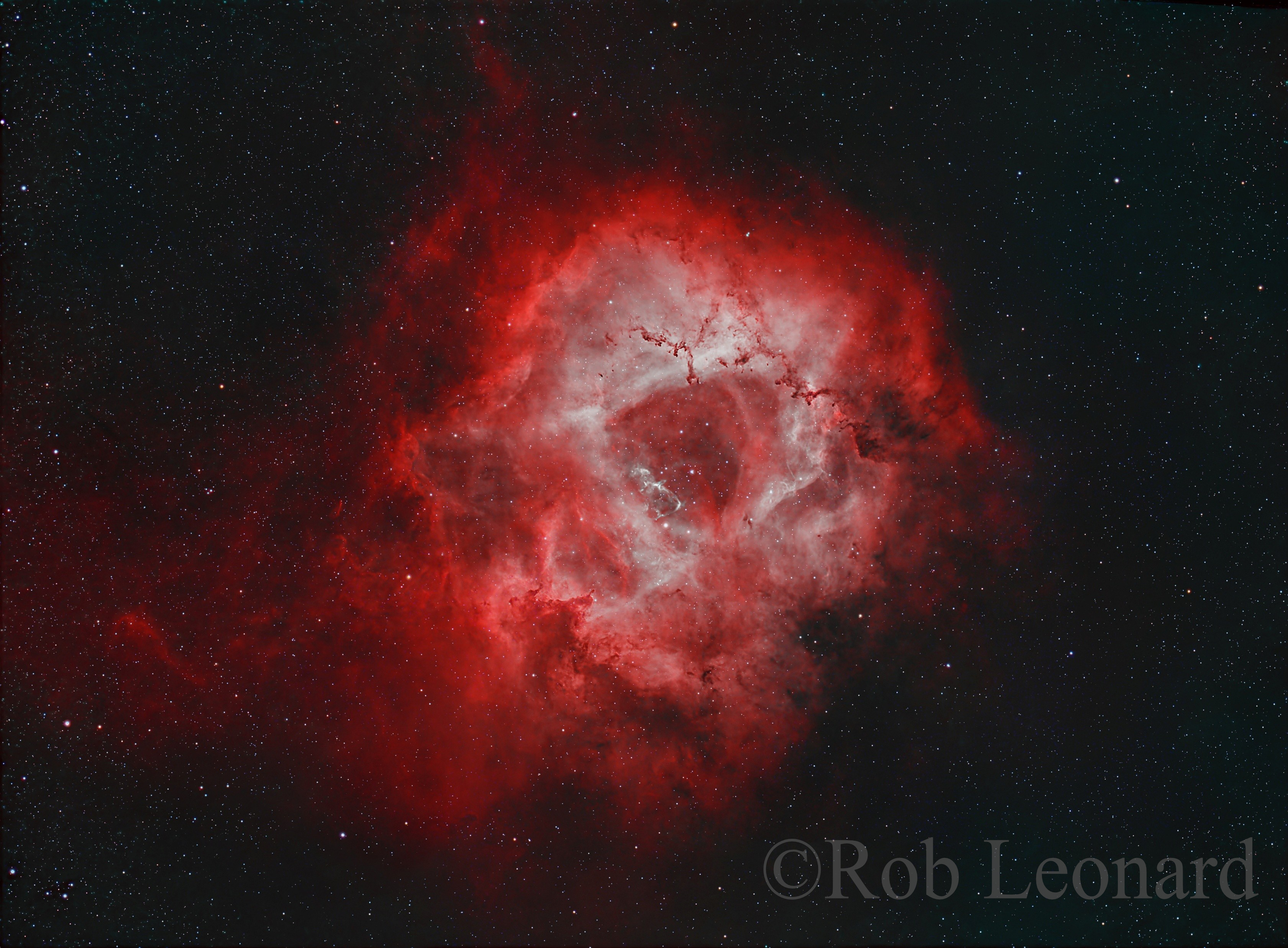
Emission nebulae are vast clouds of gas glowing because radiation from nearby hot stars energises them. Hydrogen produces much of the characteristic red glow seen in astronomical photographs. Many are stellar nurseries, where fresh stars are forming inside clouds that can stretch across many light-years of space.
Stellar Remains
Featured example: Rosette Nebula (NGC 2237)
Supernova Remnants
Supernova remnants are the remains of stars that ended their lives in enormous explosions. The expanding material crashes into surrounding gas, creating glowing filaments, shells and delicate structures. The Veil Nebula is a famous example and forms part of the much larger Cygnus Loop in the constellation Cygnus.
Stellar Endings
Featured example: Veil Nebula (NGC 6960, 6992, 6995)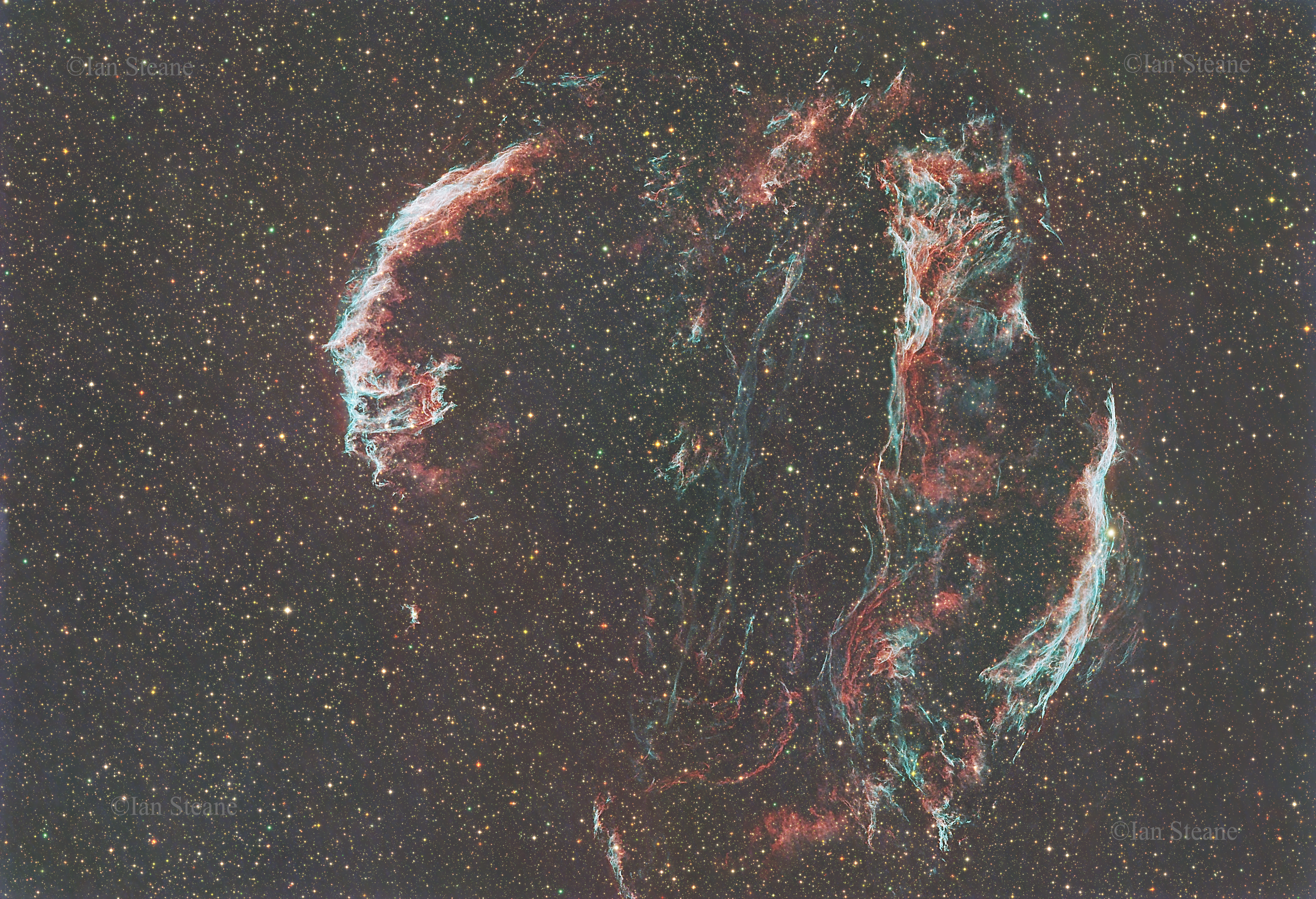
Planetary Nebulae
Despite the name, planetary nebulae have nothing to do with planets. They form when stars rather like our Sun approach the end of their lives and shed their outer layers into space. The Dumbbell Nebula is one of the best-known examples, with a small hot stellar core at its centre.
Dust and Starlight
Featured example: Dumbbell Nebula (M27)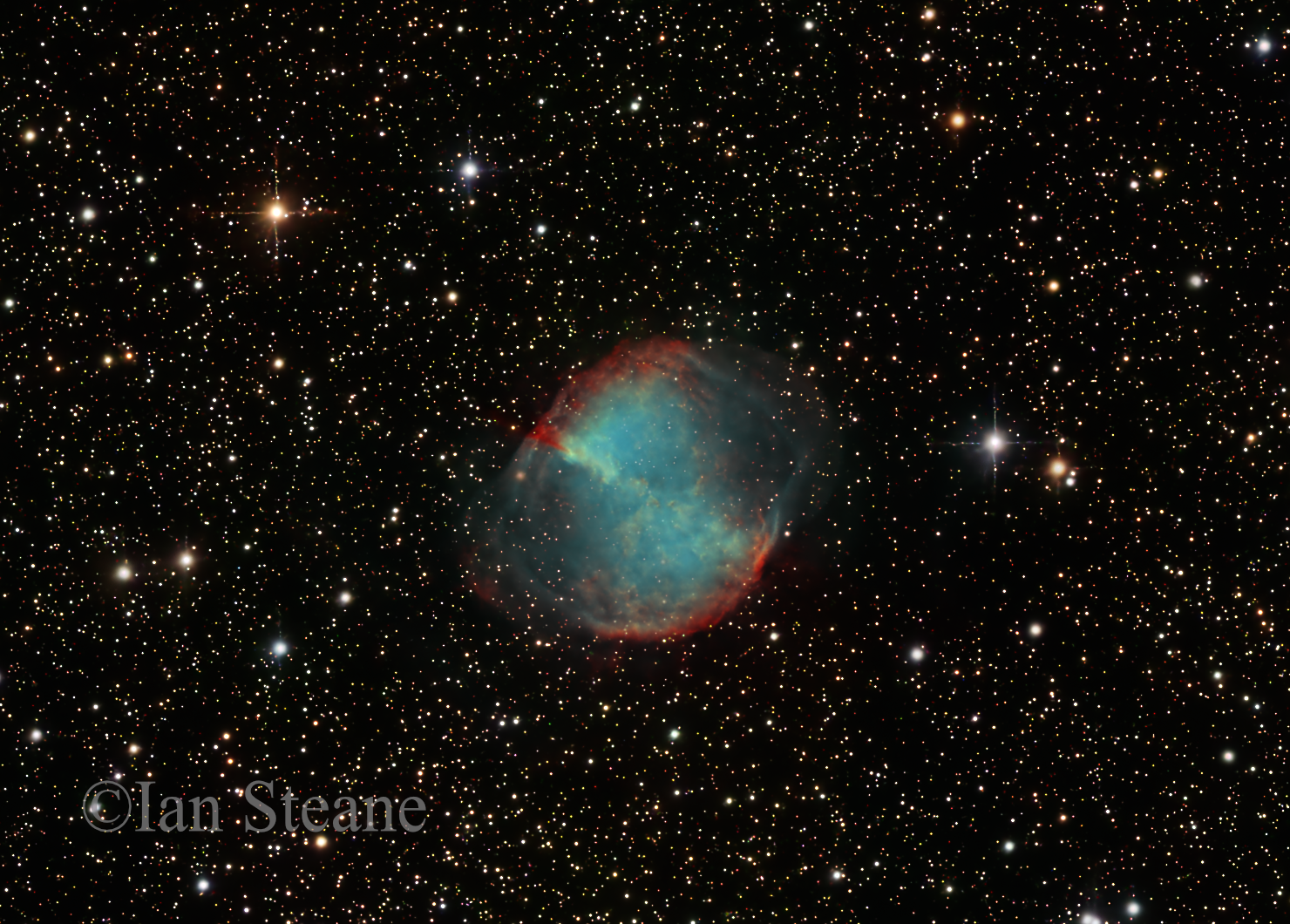
Reflection Nebulae
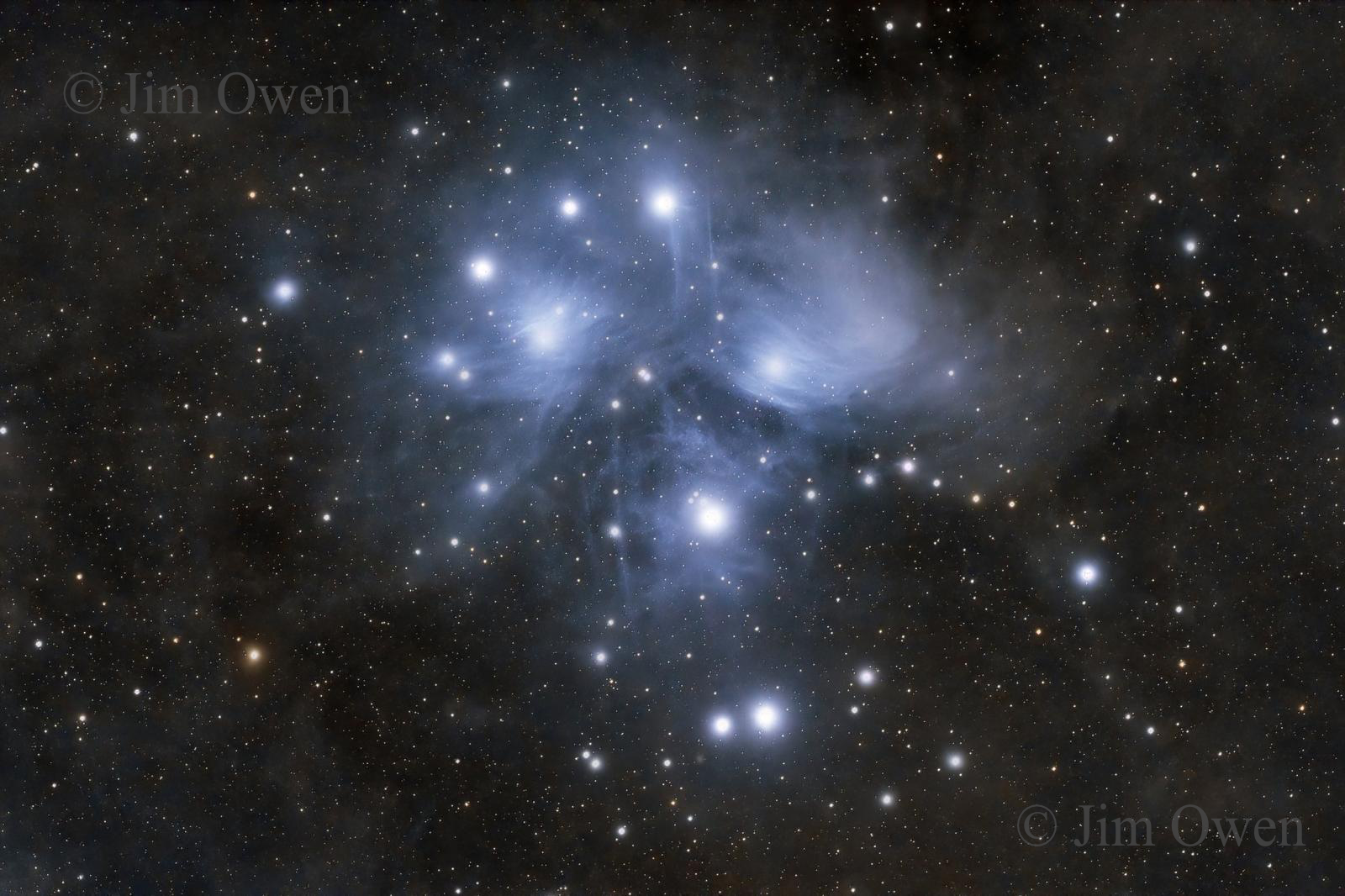
Reflection nebulae do not produce their own visible light. Instead, fine dust reflects and scatters light from nearby stars. They often appear blue in photographs, because shorter blue wavelengths scatter more strongly. The beautiful blue nebulosity around the Pleiades is a familiar and striking example.
Silhouettes in Space
Featured example: Pleiades (M45)
Dark Nebulae and Interstellar Dust
Some deep sky objects are visible because they block light. Dense clouds of dust appear as dark shapes against stars or glowing gas behind them. The famous Horsehead Nebula is a dark cloud, catalogued as Barnard 33, silhouetted against the red glow of IC 434.
Island Universes
Featured example: Horsehead Nebula (Barnard 33)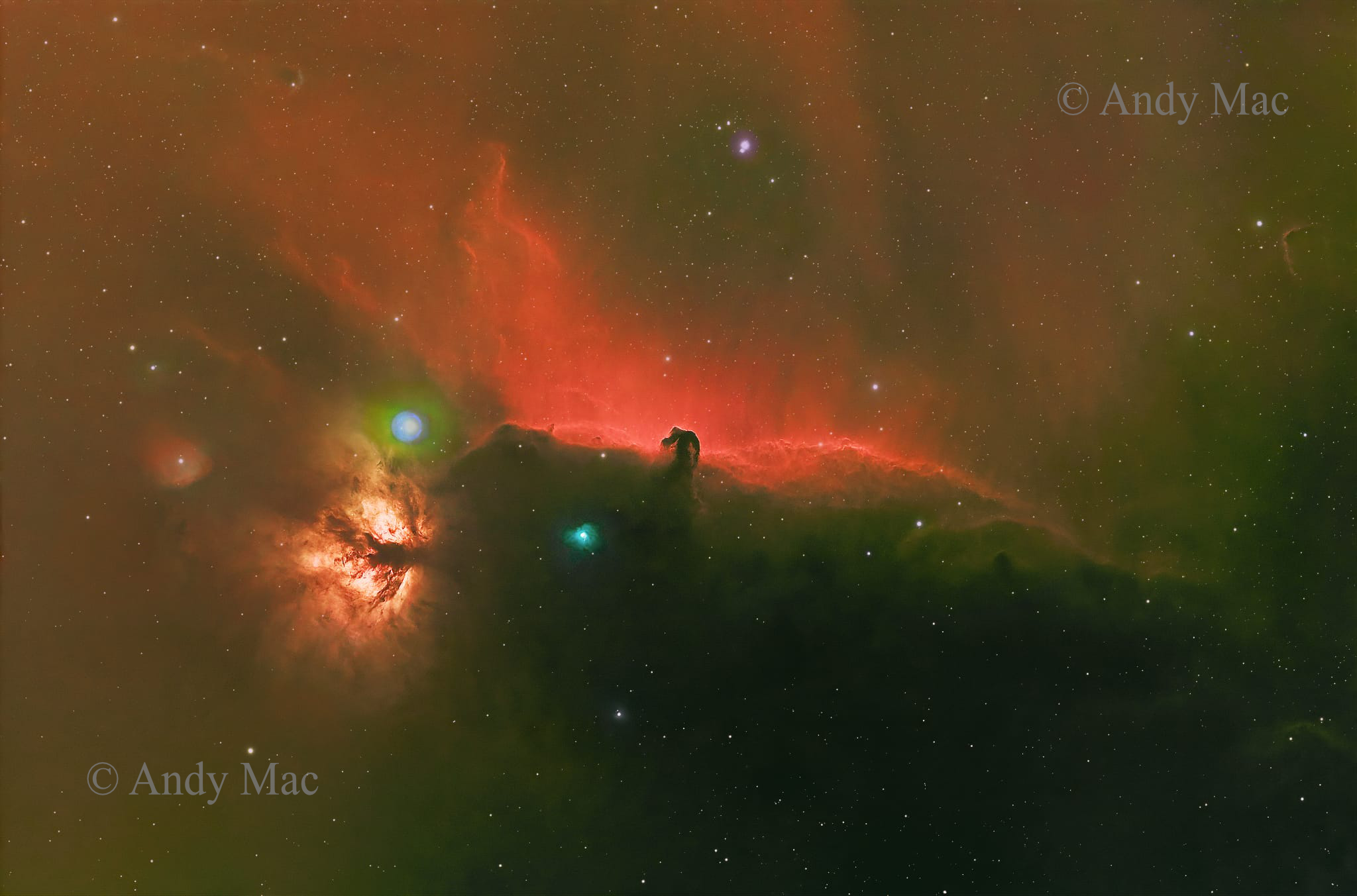
Galaxies
Galaxies are enormous collections of stars, gas and dust held together by gravity. Our Solar System lies inside the Milky Way. The light from the Andromeda Galaxy has travelled about 2.5 million years to reach us, hinting at the extraordinary scale involved when we photograph another galaxy.
Stars Together
Featured example: Andromeda Galaxy (M31)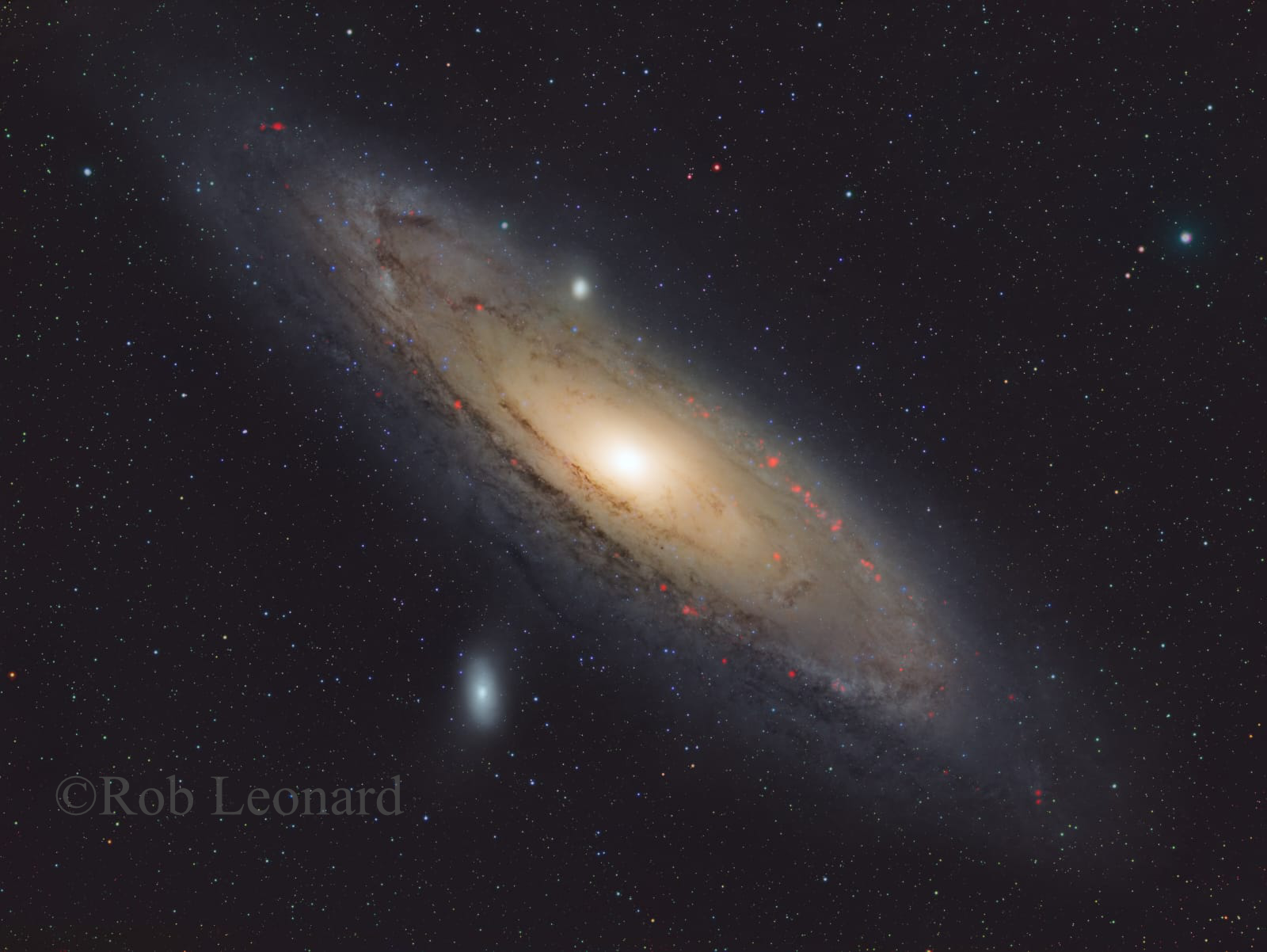
Star Clusters
Star clusters are groups of stars associated with one another. Open clusters are usually loose, young gatherings, while globular clusters are ancient and densely packed. The Hercules Globular Cluster, M13, contains hundreds of thousands of stars gathered into a roughly spherical cluster orbiting the Milky Way.
Galaxies Together
Featured example: Hercules Globular Cluster (M13)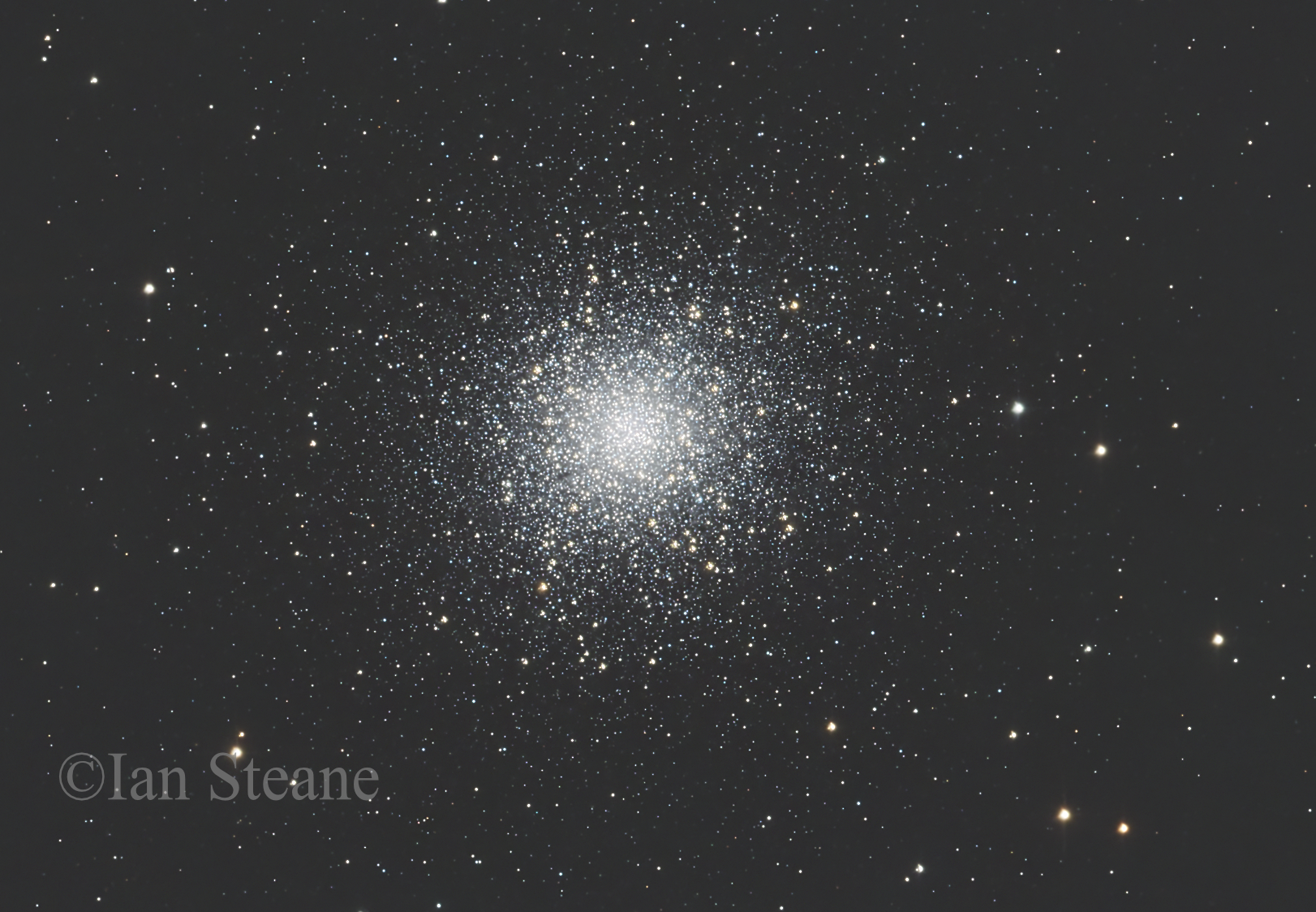
Galaxy Groups and Clusters
Markarian's Chain, in the Virgo Cluster, shows this beautifully. Many of the apparently small objects in such an image are entire galaxies, each containing millions or billions of stars and lying many millions of light-years away.
Through the Lens
Featured example: Markarian's Chain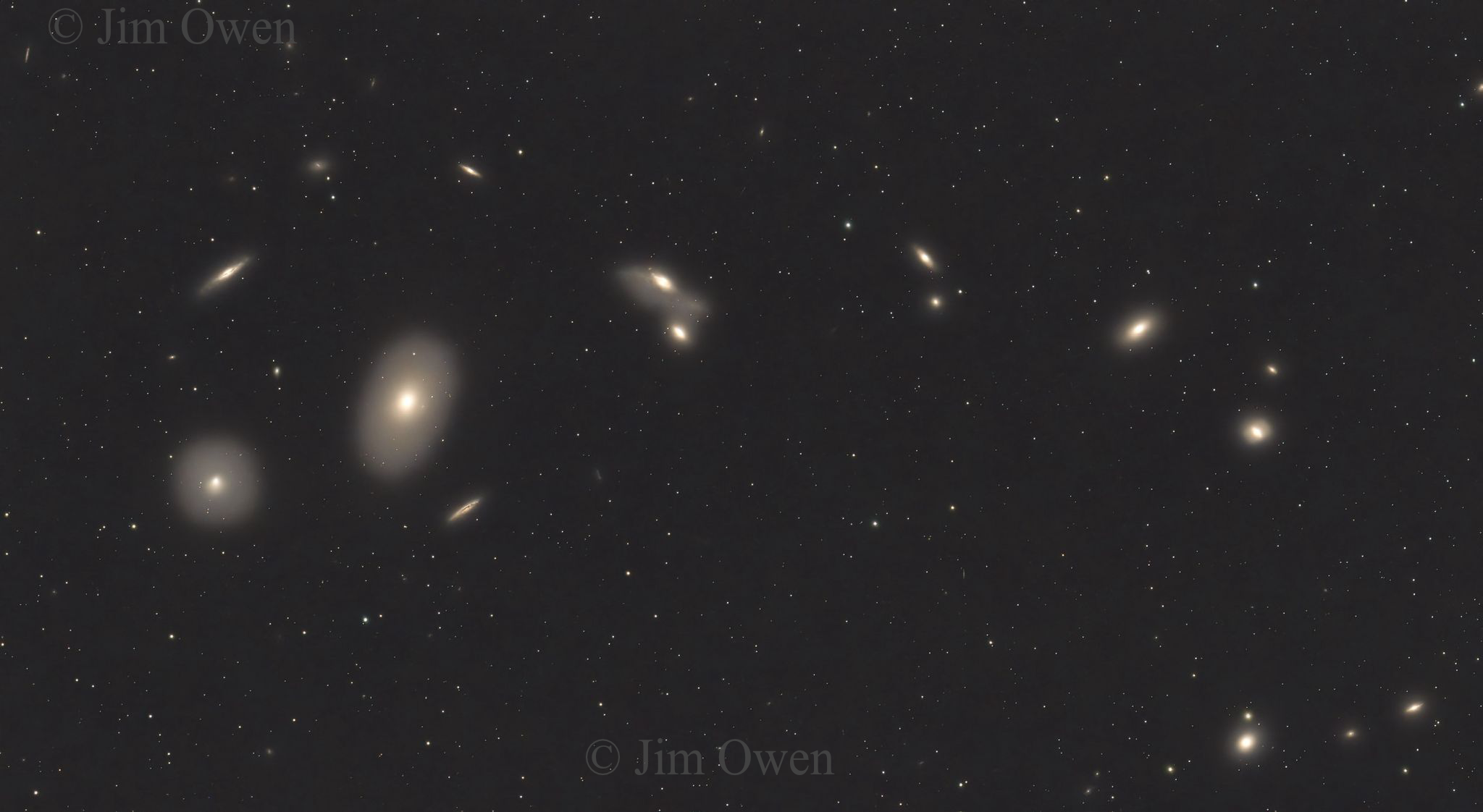
Discover the Deep Sky
Photographs of these objects are not restricted to major professional observatories. Amateur astrophotographers regularly produce remarkable images of nebulae, galaxies and star clusters, often revealing details that are impossible to see by eye alone. Rosliston Astronomy Group brings together people who enjoy learning, sharing images and exploring the night sky, making it a friendly place to discover what deep sky astrophotography can show.